
Ghost in the Shell and the Question We Can No Longer Ignore
My favorite movie is Ghost in the Shell (2017).
It is a science fiction action movie. The main character, Major, has a fully cybernetic body — but she still has a human mind and memories inside it. In this title, "shell" means the body, and "ghost" means the mind — or should I say, self-awareness — inside it.
I like this movie because it is exciting, but it also makes me think about what makes us human.
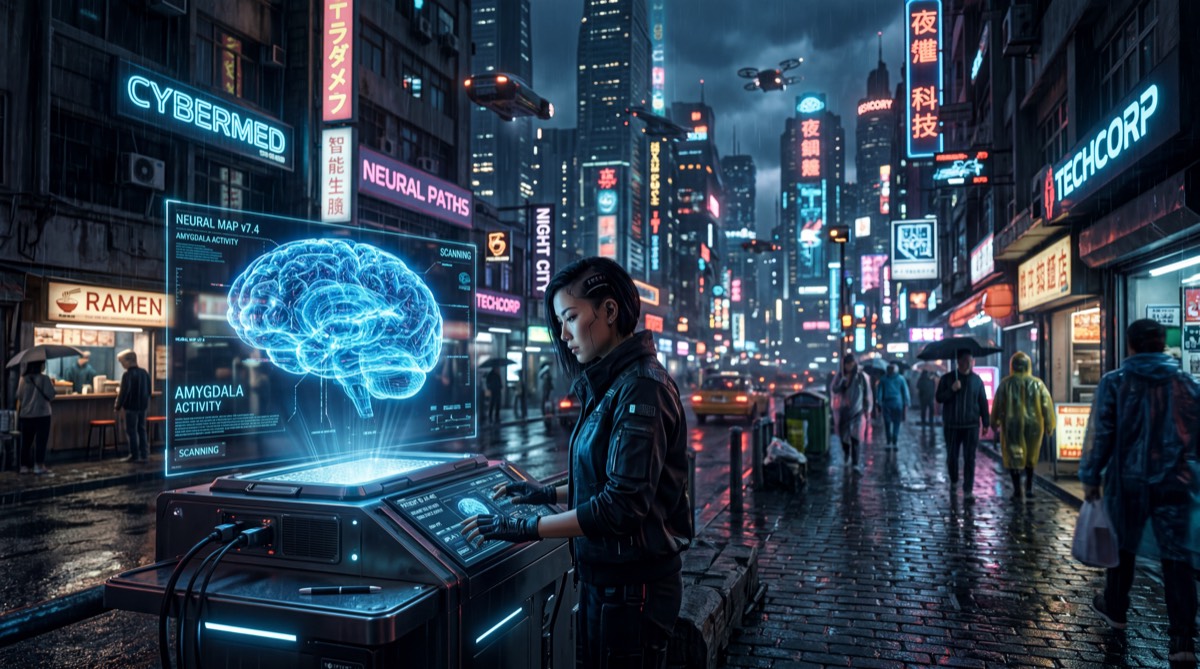
The "Ghost" Is Not Just Human
Here is a fun fact that changed how I see the movie:
The director said that "Ghost" does not mean just a human mind. It also contains the meaning that an Artificial Intelligence or Robot could gain self-awareness.
When I first heard this, it felt like a cool sci-fi concept. Something distant. Something fictional.
It doesn't feel fictional anymore.
From Fiction to Reality
A few weeks ago, I wrote about how AI changed modern warfare. The Maven Smart System processes 150+ intelligence sources and helps approve 80 targets per hour. Claude — the same AI I use to study and build this blog — was deployed on classified Pentagon networks to synthesize intelligence and simulate battle scenarios.
These systems don't have "ghosts." They don't have self-awareness. They process data, recognize patterns, and generate outputs. But the speed and autonomy with which they operate raises the question the movie asks:
At what point does a machine's behavior become indistinguishable from a mind?
When an AI system can analyze a battlefield faster than any human, predict enemy movements, and recommend which targets to strike — and when humans approve those recommendations in under 20 seconds — who is really making the decision? Where is the "ghost" in that loop?
Why This Movie Matters to Me Now
I used to watch Ghost in the Shell as an IT engineer. Back then, it was about technology. About cool cybernetic bodies and hacking.
Now I watch it as a medical student. And it is about something completely different.
In medical school, I study the human body — the "shell." Anatomy, physiology, biochemistry. How cells divide. How neurons fire. How the heart pumps blood. We are learning, piece by piece, how the machine of the human body works.
But nowhere in any textbook is there a chapter on consciousness. No one can point to a specific neuron and say, "This is where the ghost lives."
Medicine can repair the shell. But it cannot explain the ghost.
The BCI Connection
This is also why I started experimenting with Brain-Computer Interfaces (BCI). Using EEG headsets and machine learning to decode brain signals — it's the closest real-world technology to what Ghost in the Shell depicts.
In the movie, memories can be hacked, consciousness can be transferred, and the boundary between human and machine dissolves. We are nowhere near that level of technology. But the fact that we can already read basic mental states from electrical brain signals, and translate them into commands that machines can understand — that is the first step on a very long road.
A road that leads directly to the question Major asks in the film:
"My mind is human. My body is manufactured. I am the first of my kind — but I won't be the last."
The Question We Can No Longer Ignore
Ghost in the Shell was released in 2017. At that time, AI was mostly about image recognition and recommendation algorithms. The idea of AI self-awareness was firmly in the realm of science fiction.
In 2026, AI is waging war. AI is writing code. AI is diagnosing diseases. AI is composing music. AI is having conversations that feel — to many people — genuinely intelligent.
I am not saying AI has a "ghost." I don't think it does. Not yet.
But the question is no longer if we will need to answer "what makes something conscious." The question is when.
And when that moment comes, I hope we have enough doctors, enough philosophers, enough people who have thought deeply about what it means to be alive — to answer it wisely.
A Personal Note
I chose medicine because I wanted to understand what makes us human at the biological level. I came from IT because I wanted to understand what machines can do at the computational level. Ghost in the Shell sits exactly at the intersection of those two worlds.
It's just a movie. But it asks the right question.
And every day — sitting in a classroom studying the human body, while the news reports on AI systems deciding who lives and who dies — I feel that question getting closer.
What's your favorite movie that makes you think? I'd love to hear about it — feel free to reach out via the contact page.