
Learning Chemistry with AI: A Simple Approach That Actually Works / AIで化学を学ぶ
English Summary: As a preparatory medical student in Bulgaria, I struggled with chemistry using traditional textbooks. Switching to an AI-assisted study method — using ChatGPT, Gemini, and Claude — transformed my learning experience. This article documents the approach, its strengths, its limitations, and why interactive learning works better for me.
現在、私はブルガリアで医学を目指して勉強しています。授業では英語を中心に学んでいますが、それと並行して、基礎となる科目の一つである化学も、自宅で少しずつ進めています。
I'm currently studying in Bulgaria, aiming for medical school. While my classes focus mainly on English, I'm also working through chemistry — one of the foundational subjects — on my own at home.
教科書が「入ってこない」問題
When Textbooks Just Don't Click
最初は、日本から持ってきた参考書を使って勉強しようとしていました。しかし、思っていたよりも内容が頭に入ってこず、ただページを眺めているだけの時間が続いてしまいました。
At first, I tried studying with reference books I brought from Japan. But the content wasn't sticking — I found myself just staring at pages without actually absorbing anything.
集中できていないのか、理解力が足りないのか、自分でもよく分かりませんでしたが、少なくとも効率的ではないと感じていました。
I wasn't sure if it was a focus issue or a comprehension issue, but I knew it wasn't efficient.
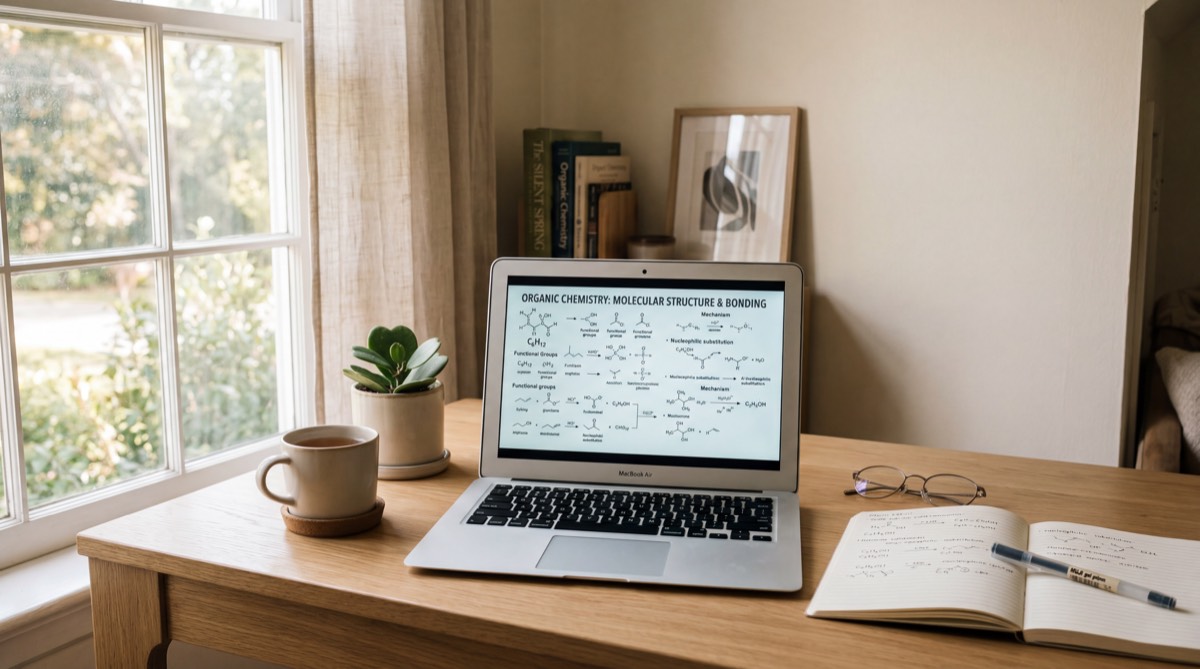
そんな中で、別の方法を試してみることにしました。それが、最近よく使われるようになっているAIを使って勉強するというやり方です。
So I decided to try something different — studying with AI tools, which have become increasingly accessible.
AIに「教えてもらう」という発想
Letting AI Be the Teacher
最初に試したのは、ChatGPTやGeminiに基本的な内容を説明してもらうことでした。
My first step was asking ChatGPT and Gemini to explain basic concepts to me.
例えば、原子構造や化学結合などのテーマについて質問すると、比較的シンプルな言葉で説明してくれます。教科書と違って、一方的に読むだけではなく、自分の理解度に合わせて質問を変えられるのが特徴だと感じました。
For example, when I asked about atomic structure or chemical bonding, they explained it in relatively simple terms. Unlike textbooks, I could adjust my questions based on my level of understanding — it's a two-way interaction, not one-way reading.
また、説明のあとに簡単な問題を出してもらうこともできます。自分で問題を探す必要がないため、**「理解 → 確認」**という流れをスムーズに作れる点は、思っていた以上に便利でした。
I could also ask them to generate practice questions after each explanation. This created a smooth "understand → verify" loop without having to search for problems myself.
分からない部分は別のAIに聞く
When One AI Isn't Enough, Ask Another
ただし、すべてが一度で理解できるわけではありません。問題を解いていると、どうしても分からない部分が出てきます。そういうときは、別のAIを使って補足してもらうようにしています。
Not everything clicks on the first try. When I get stuck on a problem, I switch to a different AI for a supplementary explanation.
私の場合は、Claudeを使うことが多いです。特に意識しているのは、次のようなお願いの仕方です:
I often turn to Claude. The key prompt I've found most effective is:
「表や図を使って説明してほしい」
"Please explain using tables or diagrams."
この一言を加えるだけで、かなり理解しやすくなります。文章だけで説明されるよりも、
Just adding this one request dramatically improves comprehension. Compared to text-only explanations:
- 比較表 — 似た概念の違いが一目で分かる / Comparison tables clarify differences at a glance
- 図式的な説明 — プロセスの流れが視覚的に理解できる / Diagrams make processes visual
- ステップごとの整理 — 複雑な手順が順序立てて把握できる / Step-by-step breakdowns organize complex procedures
がある方が、頭の中で整理しやすいと感じています。
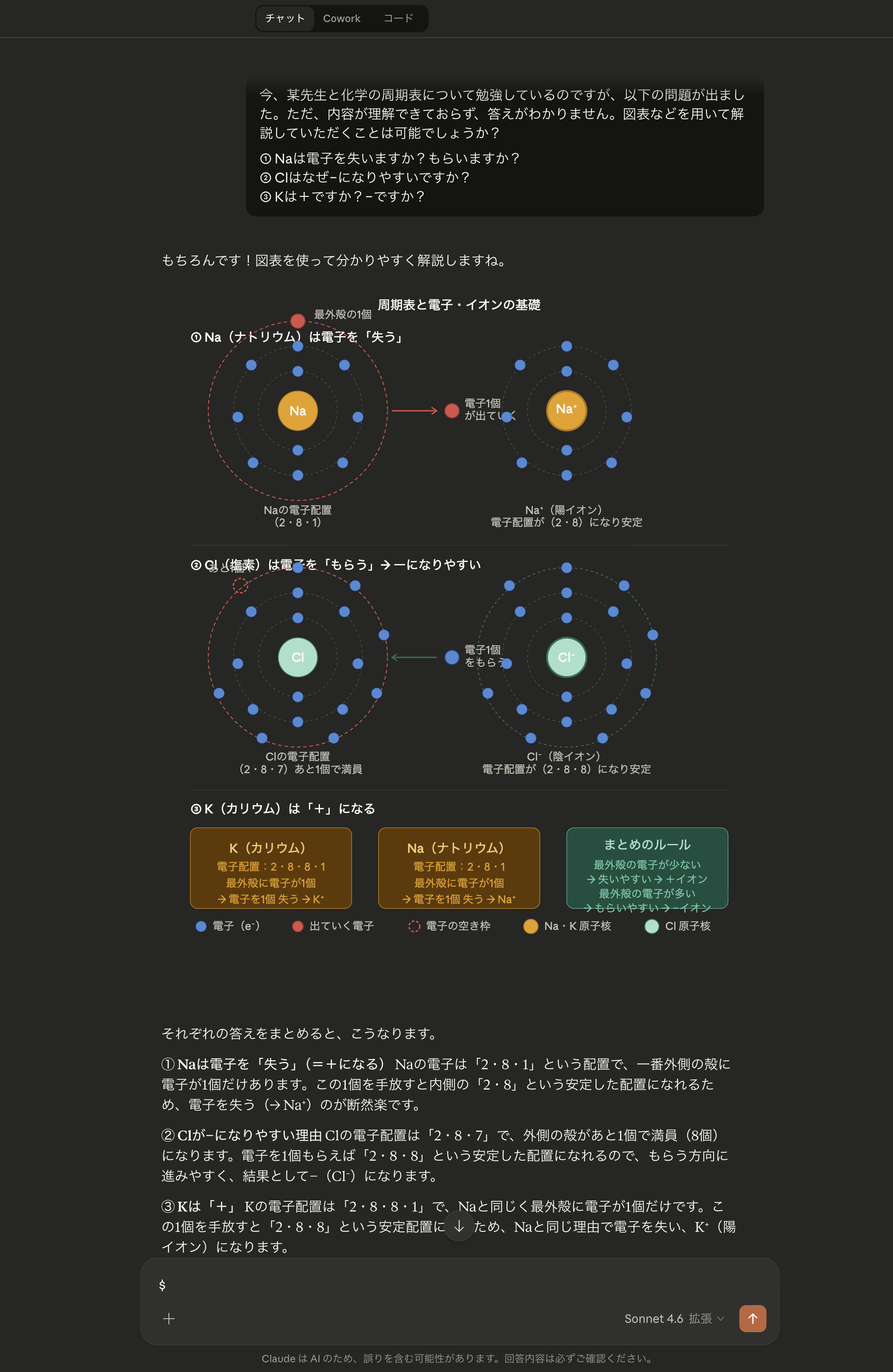
以下は、実際にClaudeに「図表を使って説明して」とお願いしたときの画面です。電子配置とイオンの基礎について、図と比較表を使って整理してくれています。
Below is an actual screenshot of Claude explaining electron configuration and ions using diagrams and comparison tables — exactly what I asked for.
なぜこの方法が自分に合っているのか
Why This Method Works for Me
このやり方を続けていて気づいたのは、自分は**「読むだけ」の勉強よりも、やり取りしながら理解する方が合っている**ということでした。
What I've realized through this process is that I learn better through interaction than through passive reading.
教科書の難しさ / Textbook Limitations
| 課題 / Challenge | 詳細 / Detail |
|---|---|
| 説明の調整ができない | 自分のレベルに合わせた説明に変えられない |
| 部分的な深掘りが難しい | 分からない箇所だけ掘り下げることができない |
| 一方向の理解になりやすい | インプットだけで終わりがち |
AIの柔軟さ / AI Advantages
| 強み / Strength | 詳細 / Detail |
|---|---|
| 何度でも質問できる | 同じ質問を違う角度から聞き直せる |
| レベルに合わせた説明 | 「中学生にも分かるように」も「大学レベルで」も可能 |
| その場で確認問題 | 理解した直後にテストできる |
もちろん、すべての説明が完璧とは限りませんし、最終的には自分で確認する必要があります。それでも、学習の入り口としては非常に使いやすいと感じています。
Of course, not every AI explanation is perfect, and I always need to verify critical information. But as an entry point for learning, it's remarkably effective.
具体的な学習フローの例
My Actual Study Flow
実際に私が行っている化学の学習フローを紹介します:
Here's the actual workflow I use for studying chemistry:
Step 1: ChatGPT or Gemini にテーマの概要を説明してもらう
        → "原子の電子配置について基礎から教えて"

Step 2: 説明を読んで理解できた部分・できない部分を仕分ける

Step 3: 分からない部分を Claude に質問(表・図リクエスト付き)
        → "sp3混成軌道について、表を使って比較しながら説明して"

Step 4: Claude に確認問題を5問出してもらう

Step 5: 間違えた問題だけ、再度別の角度から説明してもらう

Step 6: ノートに自分の言葉でまとめる(←ここだけはアナログ)
ポイントは、Step 6のアナログなまとめです。AIに頼りすぎると「分かった気」になるリスクがあるので、最後は必ず自分の手で書き出すようにしています。
The key is Step 6 — the analog summary. Relying too heavily on AI creates a risk of false comprehension, so I always write things out by hand at the end.
まだ簡単な段階ではあるけれど
It's Still Early Days
現在扱っている内容は、まだ基礎レベルの比較的やさしい問題です。そのため、この方法が今後どこまで通用するのかは正直まだ分かりません。
The material I'm working through is still foundational — relatively straightforward. So I honestly don't know how well this method will scale.
もっと難しい内容になったときに:
When the material gets harder, I'll need to watch for:
- 本当に理解できるのか — AIの説明で深い理解に到達できるか
- 誤解が増えないか — AIの不正確な説明を鵜呑みにしないか
- 自分で考える力が保てるか — AIに頼りすぎて思考力が低下しないか
Whether AI explanations can support deep understanding, whether inaccuracies creep in, and whether I maintain the ability to think independently.
これらは、これから注意していく必要があると思っています。
それでも、今はこの方法を続けてみる
For Now, I'll Keep Going
現時点では:
At this point:
- 何も頭に入らない状態から抜け出せた — ページを眺めるだけの時間が消えた
- 少しずつ理解できる感覚がある — 化学がまったくの暗闇ではなくなった
- 勉強への抵抗が減った — AIとの「会話」形式なので、始めるハードルが低い
I've broken out of the "nothing sticks" phase. Chemistry is no longer a complete black box. And the conversational format lowers the barrier to starting each study session.
完璧な方法ではないと思いますが、少なくとも今の自分にとっては、続けやすい方法の一つです。これからも状況に応じてやり方を調整しながら、少しずつ進めていければいいと考えています。
It's not a perfect method. But for me, right now, it's sustainable — and that matters more than perfection.
AIを使ったブログ構築の全記録については、Claude Codeでブログを0から作った全記録もぜひご覧ください。